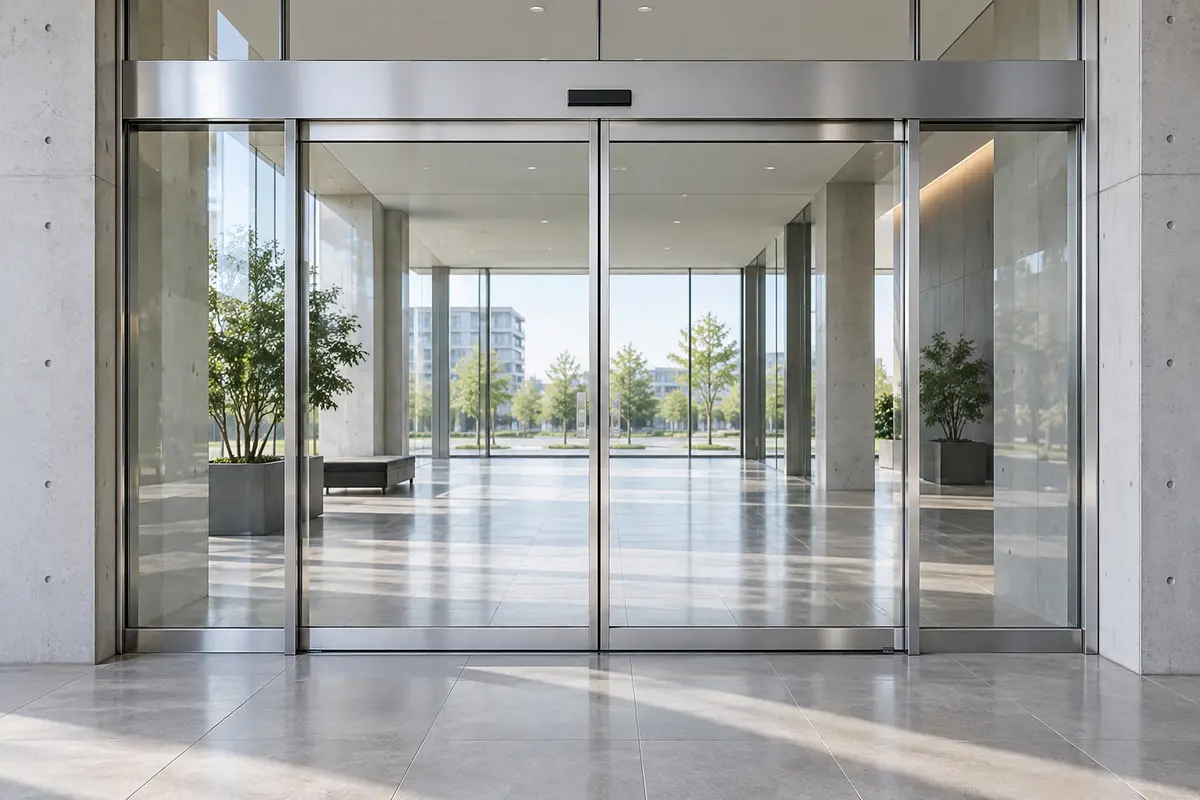
Automatic doors are motorized entrances that open and close using sensors or access controls without manual effort. These systems provide smooth barrier-free movement for people in commercial and public spaces. They also help buildings maintain indoor temperatures by closing promptly after each entry.
Common Types of Automatic Doors
Sliding panels move sideways along a track to save floor space in busy entrances. Swinging models push outward or inward when a user approaches the threshold. Revolving styles turn continuously to control air movement between inside and outside zones. Folding panels tuck neatly to the side to create wide pathways where wall space is limited.
Core Components and Operational Mechanisms
Motion detectors and optical sensors watch for approaching foot traffic. A control box processes these electronic signals and commands the motor to move the door panels. Safety beams check the walkway to stop the panels if an obstacle blocks the path. Mechanical release levers also allow people to push doors open during power failures.
Practical Benefits for Busy Properties
Hands-free entry makes navigation easy for people carrying packages or pushing carts. Regulated opening cycles limit conditioned air loss to maintain comfortable indoor spaces. Controlled movement patterns also prevent pedestrian congestion near major building portals. Clean environments stay protected because fewer people touch shared door surfaces directly.
Routine Maintenance and Proper Care
Debris inside bottom floor tracks causes mechanical strain and erratic panel movement. Dust on optical sensors can trigger false openings or delay normal cycles. Periodic cleaning of glass and floor guides ensures smooth daily operation. Facility teams should inspect the safety reverse features regularly to verify proper response.
Frequently asked questions
How do sensors detect approaching pedestrians?
Sensors use infrared light or microwave radar to detect movement and heat. When a person steps into the detection field, the sensor sends a signal to trigger the door motor.
What happens to the entrance during a power outage?
Backup battery packs keep systems operational for a short period. Users can also disengage the drive system and slide or push the panels open manually.
Why do some sensor systems fail to open smoothly?
Dirt on sensor lenses or loose electrical wiring can interfere with normal detection. Cold drafts, moving plants, or floor reflections can also create false readings.
Can existing manual entryways become automated?
Technicians can install low-energy swing operators on many conventional frames. The existing structural support must be strong enough to hold the operator hardware securely.
Summary
Automated entryways enhance accessibility, maintain indoor climate stability, and streamline traffic flow. Proper installation and routine sensor upkeep keep these powered systems working reliably for every visitor.