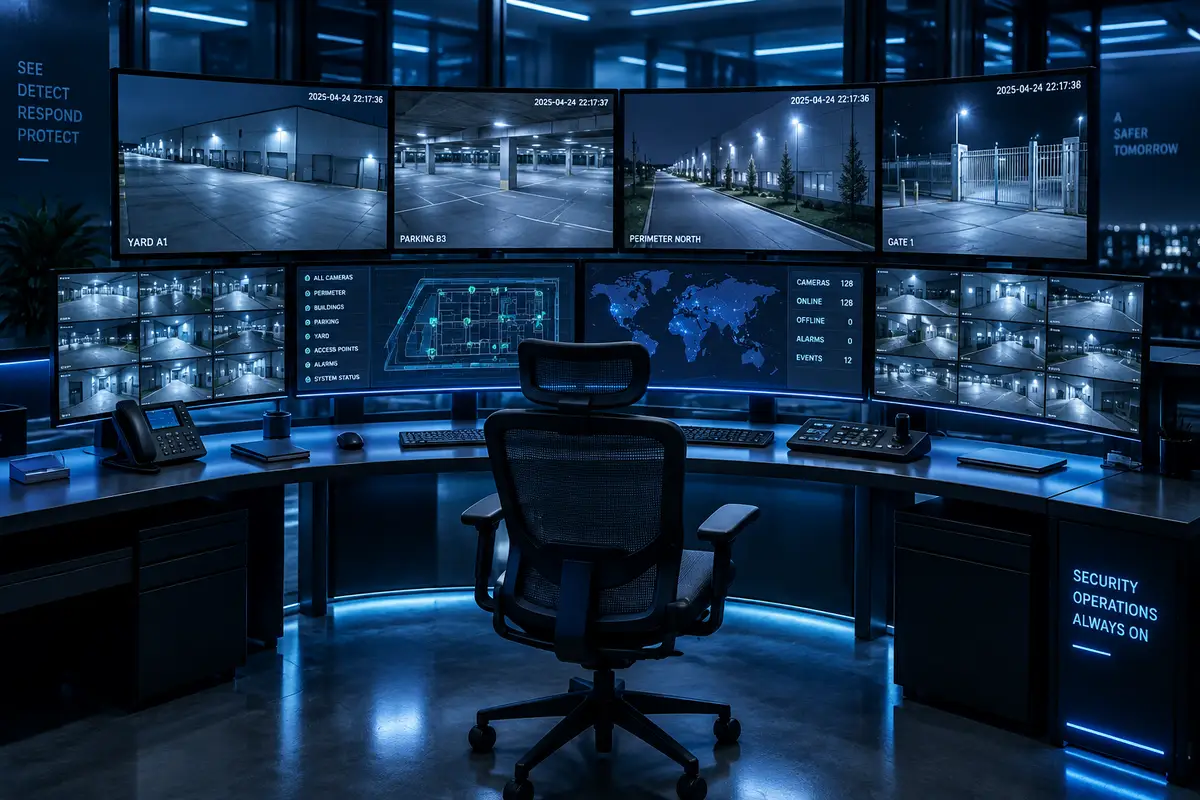
Live video monitoring protects commercial properties by streaming real-time camera footage to trained security operators who stop crimes immediately. This proactive oversight keeps physical assets safe before damage occurs.
How Live Video Monitoring Operates
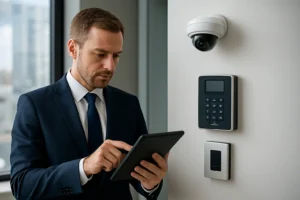
Digital cameras transmit live signals over an internet connection to an offsite operations center. Intelligent software detects unusual motion around gates or doors and flags the incident to an observer. The security professional evaluates the visual feed in seconds. If an unauthorized intruder enters the site, the agent uses an audio speaker to warn the trespasser away. The agent can contact law enforcement officials without delay when a threat persists.
Core Benefits for Commercial Sites
Standard passive alarms alert owners only after an intruder breaks a window or forces a door. Visual intervention deters theft before suspects enter a structure. Outdoor storage yards and parking facilities gain continuous protection during overnight hours. Clear video footage also reduces false alarm incidents that drain local police resources. Commercial facilities keep workers safer during late shifts through rapid remote assistance.
Common Implementation Mistakes
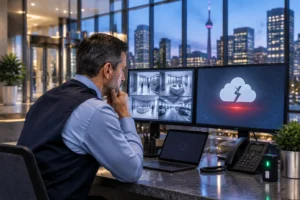
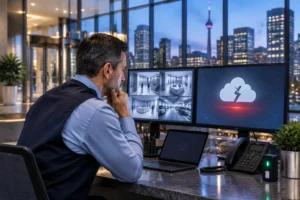
Many facility managers position camera lenses with large blind spots around perimeter fences. Poor night illumination creates dark corners that sensors cannot interpret accurately. Another frequent error involves using weak internet connections that drop video feeds during bad weather. Companies also sometimes neglect regular camera lens cleaning, which leads to blurry images and missed alerts.
Practical Steps for Deployment
Organizations should walk their property boundaries during day and night hours to map critical access areas. Upgrading network bandwidth ensures continuous data transmission without unexpected frame loss. Installing outdoor speakers alongside high definition cameras gives remote agents effective voice intervention tools. Regular equipment maintenance schedules ensure that lenses remain clean and power supplies operate reliably.
Frequently asked questions
How does remote surveillance differ from traditional recording?
Traditional recording archives footage for review after a crime happens. Remote surveillance allows human observers to watch activity in real time and stop incidents immediately.
What happens when an operator spots an unauthorized person?
The operator verifies the activity and gives a direct audio warning through onsite speakers. If the person refuses to leave, the operator contacts emergency services right away.
Can visual monitoring function during complete darkness?
Infrared technology and thermal sensors allow cameras to detect movement in low light or total darkness. Additional security lighting also helps operators view details clearly.
Does remote supervision work during severe weather conditions?
Weatherproof camera housings protect the lenses from wind, rain, and snow. Robust software filters out falling precipitation to prevent false alarms.
Summary
Live surveillance provides proactive security for commercial properties by combining smart cameras with trained human operators. Addressing blind spots, maintaining strong internet links, and adding audio talk down speakers helps businesses deter property crime effectively.