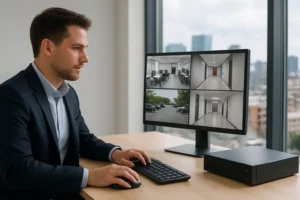
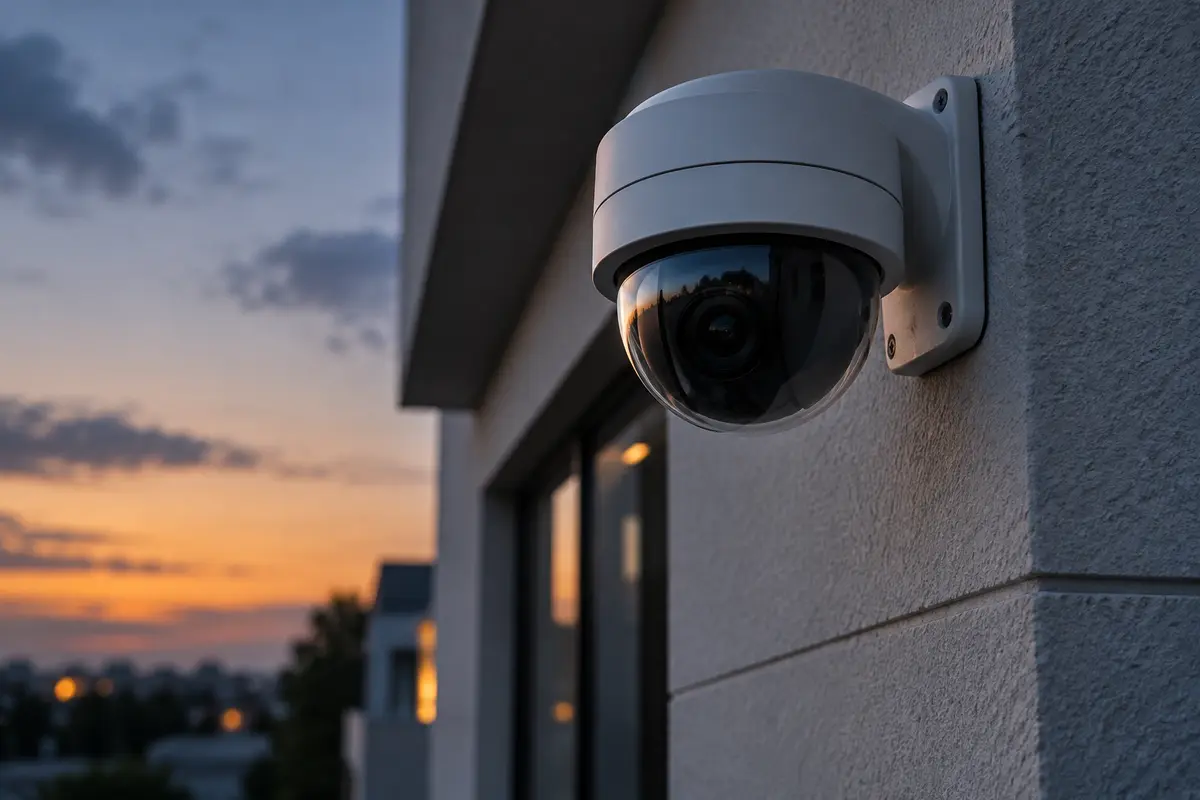
A cctv camera is a video device that records images of an area and sends them to a monitor or storage system for later viewing. It helps deter unwanted activity and gives a visual record of events at a home or business.
How a CCTV Camera Works
A cctv camera captures video through a lens and sensor. The image is then sent through a cable or wireless signal to a recorder or screen.
Most systems store footage on a hard drive or memory card. Some modern setups also save video to an online storage service for remote access.
A viewer can watch live footage or play back older recordings. This makes it easier to check on a property at any time of day.
Common Types of CCTV Cameras
Dome cameras have a rounded cover and are often used indoors because they blend into ceilings. Bullet cameras are longer and are common outdoors since they point in one clear direction.
Wired cameras connect through cables and tend to offer a stable signal. Wireless cameras send video over a network, which makes installation simpler in many cases.
Some cameras include night vision, motion sensors, or two way audio. These features add function without changing the basic way the camera records video.
Why a CCTV Camera Matters
A visible cctv camera can discourage theft or trespassing before it happens. Many people place a camera near entry points such as doors, gates, or driveways.
Recorded footage can also help a person understand what happened during an incident. This can support insurance claims or simple fact checking after an event.
Beyond security, cameras can help monitor deliveries, pets, or general activity around a property. This gives peace of mind even when no one is home.
Common Mistakes to Avoid
Placing a camera too high or too far from the area of interest can lead to blurry or useless footage. It helps to test the angle and distance before fixing the camera in place.
Ignoring lens cleaning and lighting conditions is another frequent error. Dirt, glare, or poor lighting can all reduce video clarity.
Many people also forget to check storage limits. If a hard drive fills up, older footage may be overwritten before anyone reviews it.
Simple Steps to Get Started
Start by deciding which areas need coverage, such as entry doors or parking spots. This helps decide how many cameras are needed and where to place them.
Choose between wired and wireless options based on the layout of the property. A wired setup may suit a permanent location, while wireless suits flexible placement.
After installation, test the camera view at different times of day. Adjust the angle or lighting as needed to keep the footage clear and useful.
Frequently asked questions
Does a CCTV camera record sound as well as video?
Some models include a microphone for audio, but many basic cameras only record video. Checking the product details reveals whether audio recording is included.
How long does CCTV footage usually stay stored?
Storage time depends on the recording quality and the size of the storage device. Older footage is often overwritten automatically once the storage space is full.
Can a CCTV camera work without an internet connection?
Yes, many cameras record directly to a local hard drive or memory card without needing internet access. An internet connection is mainly needed for remote viewing.
Where is the best place to install a CCTV camera?
Entry points such as front doors, back doors, and driveways are common choices. Areas with clear sightlines and steady lighting tend to work well.
Do CCTV cameras need regular maintenance?
Lenses should be cleaned periodically to avoid blurry footage from dust or smudges. Checking cables and storage space regularly also keeps the system reliable.
Summary
A cctv camera records video to help monitor a property, deter unwanted activity, and provide a record of events for later review.