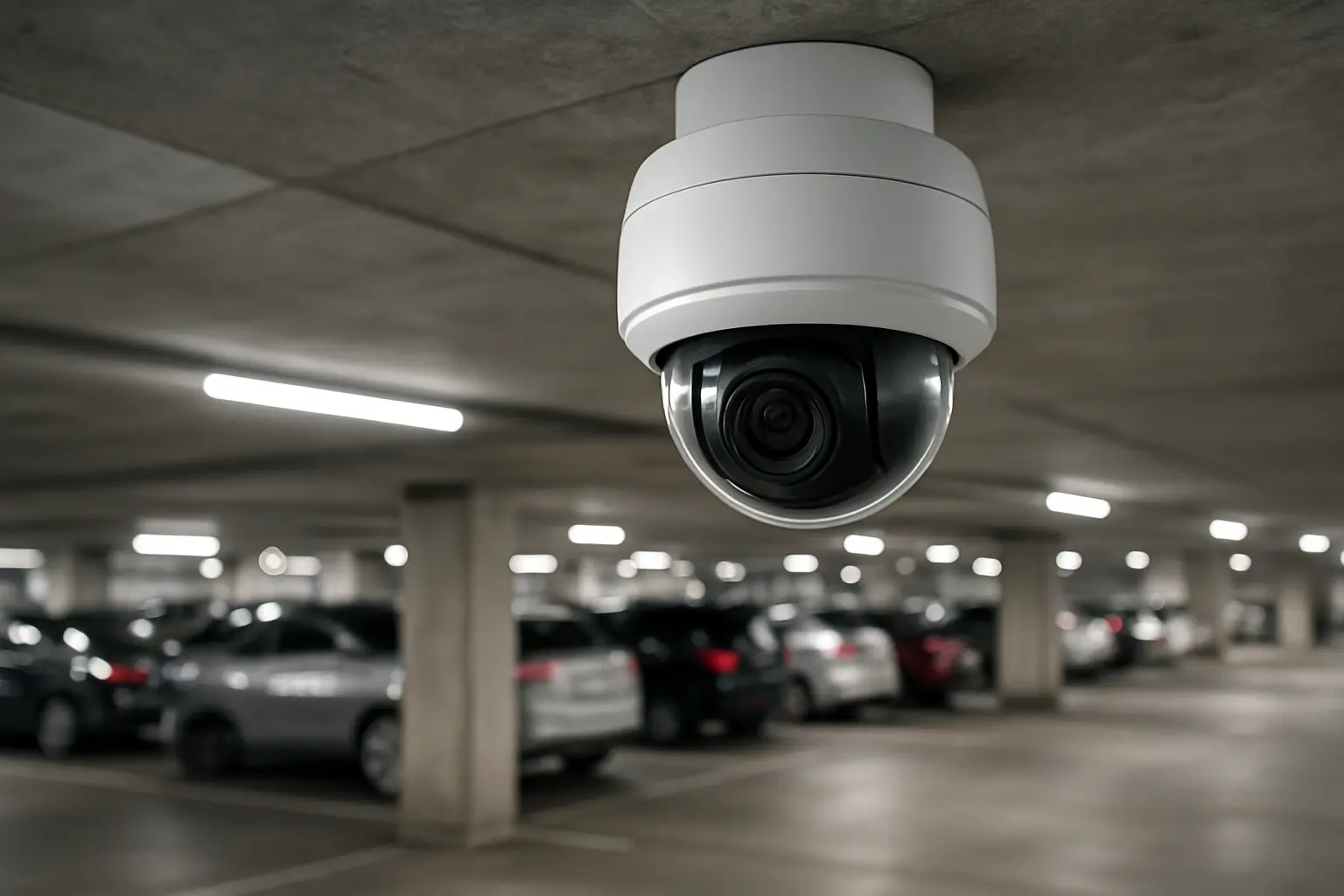
Underground and multi‑level parking garages present unique safety and liability challenges for property managers across Toronto and the GTA. Properly specified parking garage security cameras Toronto installations reduce theft, vehicle damage and injury claims while preserving clear evidence when incidents occur. This guide explains the technical, environmental and privacy considerations to design reliable surveillance systems tailored to garage environments.
Key challenges of underground and multi‑level parking garages
Garages combine low light, mixed lighting sources and reflective surfaces from vehicles, plus structural columns and long sight lines. These conditions create glare, shadowed areas and changing dynamic range between bright ramps and dark corners. Moisture, dust and occasional vandalism further stress hardware and cabling. Any design must account for these constraints to deliver usable images day and night.
Camera types and features to consider
Choosing the right camera features is critical for consistent evidence capture in garages.
Low‑light and starlight sensors
Cameras with sensitive sensors (often branded starlight) provide usable color or monochrome images at very low lux levels, reducing reliance on IR in areas where colour detail matters for identification.
Wide dynamic range (WDR)
WDR balances blown highlights from headlights and deep shadows in the same scene. WDR is essential on ramps and near entrances where lighting contrast is extreme.
Varifocal and PTZ for ramps and large bays
Varifocal domes and PTZ units allow installers to focus on long lanes, switch viewpoints for incidents, and adapt coverage during commissioning. PTZs should be used selectively due to cost and to avoid blind periods.
IR vs white‑light illumination
Infrared illumination is covert but loses colour; white‑light LEDs provide colour at night and can deter wrongdoing. Use a mix depending on privacy and evidence needs.
Vandal‑resistant and IK/Ingress protections
Select IK‑rated housings and at least IP65 or IP66 enclosures in humid, dusty or vehicle‑wash climates common in parking structures.
ANPR/LPR cameras for plate capture
When licence plate data is required for access control or investigations, select cameras with appropriate resolution, shutter speeds and mounting geometry for automatic number plate recognition (ANPR/LPR).
Optimal camera placement and coverage strategies
Placement determines whether footage is actionable.
Entrance/exit lanes and ticket booths
Prioritize high‑resolution cameras with plate‑friendly angles for lanes and booths. Aim for unobstructed, slightly downward views to capture plates and driver faces where lawful.
Ramps, stairwells and elevator lobbies
Ramps need cameras that handle changing light; stairwells and elevator lobbies are high‑risk zones requiring dedicated coverage, ideally from two angles to avoid blind spots.
High‑risk zones
Cover garbage rooms, storage areas and dark corners with vandal‑resistant domes and consider motion‑activated white lights to improve detail during incidents.
Mounting heights and fields of view
Mount cameras high enough to reduce tampering (typically 3–4 m where structurally possible) but ensure FOV and pixel density meet identification requirements. Use varifocal lenses to tune the field of view during commissioning.
Integration with NVRs, storage and retention planning
Define resolution, frame rate and retention up front. High‑resolution streams and ANPR increase storage needs. Choose NVR channel counts that allow future expansion and calculate storage using realistic retention targets (days or weeks based on risk and policy).
Remote access and recording options
Secure remote viewing should be provisioned for authorized staff and shifts, with role‑based access and audit logs. Consider hybrid setups: on‑prem NVR for guaranteed capture and optional cloud sync for offsite backup.
Network, power and PoE considerations
Use managed PoE switches sized for power budget and cable run distances common in garages. Design junction points in secure, ventilated closets and include UPS protection for recorders and core switches. Surge protection at cable entry points reduces lightning and transient risk.
CCTV cybersecurity and network segmentation
Isolate camera and NVR traffic from corporate networks with VLANs, firewall rules and dedicated management subnets. Enforce firmware updates, strong passwords, two‑factor access for remote administration and centralized logging to support incident response.
Privacy and compliance in Ontario/GTA parking facilities
Minimise privacy risk by orienting cameras to focus on vehicle movement and public areas, use clear signage informing the public of recording, and limit retention according to your policy. Consult legal or privacy advisors when monitoring areas where people have heightened expectations of privacy.
Maintenance and operational checklist
- Quarterly lens cleaning and image quality checks.
- Firmware review and staged patching schedule.
- Review storage utilization and retention targets every 6–12 months.
- Routine PoE and UPS health checks.
Common deployment scenarios
Designs vary for multi‑tenant condos, municipal lots and retail garages. Multi‑tenant sites often need segmented access and privacy controls; municipal deployments may prioritise long retention and public cameras; retail garages emphasize entrance coverage and deterrence.
How 360 IT Advanced Security can help
360 IT Advanced Security provides site surveys across Toronto and the GTA, tailored camera selection, professional installation, NVR sizing and network hardening tuned for parking environments. We focus on pragmatic coverage, secure remote access and maintainable systems so your surveillance delivers evidence and deterrence without adding operational risk.
Request a free site assessment in Toronto/GTA.
Conclusion
Effective surveillance in underground and multi‑level parking garages requires the right mix of imaging technology, considered placement, resilient recording and strong cybersecurity. With careful planning and professional execution, property managers can reduce liabilities and improve safety while respecting privacy and operational constraints.