Specifying turnstiles for office lobby Toronto requires balancing security, tenant experience and code compliance. Property managers and facility teams in the GTA need a practical guide to compare optical lanes, full-height barriers, revolving doors and mantraps — and to understand accessibility (AODA) and emergency egress requirements before selecting and installing equipment.
When to choose a turnstile vs an access-controlled door or mantrap
Turnstiles are ideal when you need continuous, controlled pedestrian throughput and a visible deterrent for tailgating. Use access-controlled doors where occasional controlled entry is enough, or when an existing lobby layout cannot accommodate turnstile lanes. Mantraps and security revolving doors are appropriate for high-security tenants or where separation between public and secure zones is required.
Turnstile types explained
Optical / waist-high turnstiles
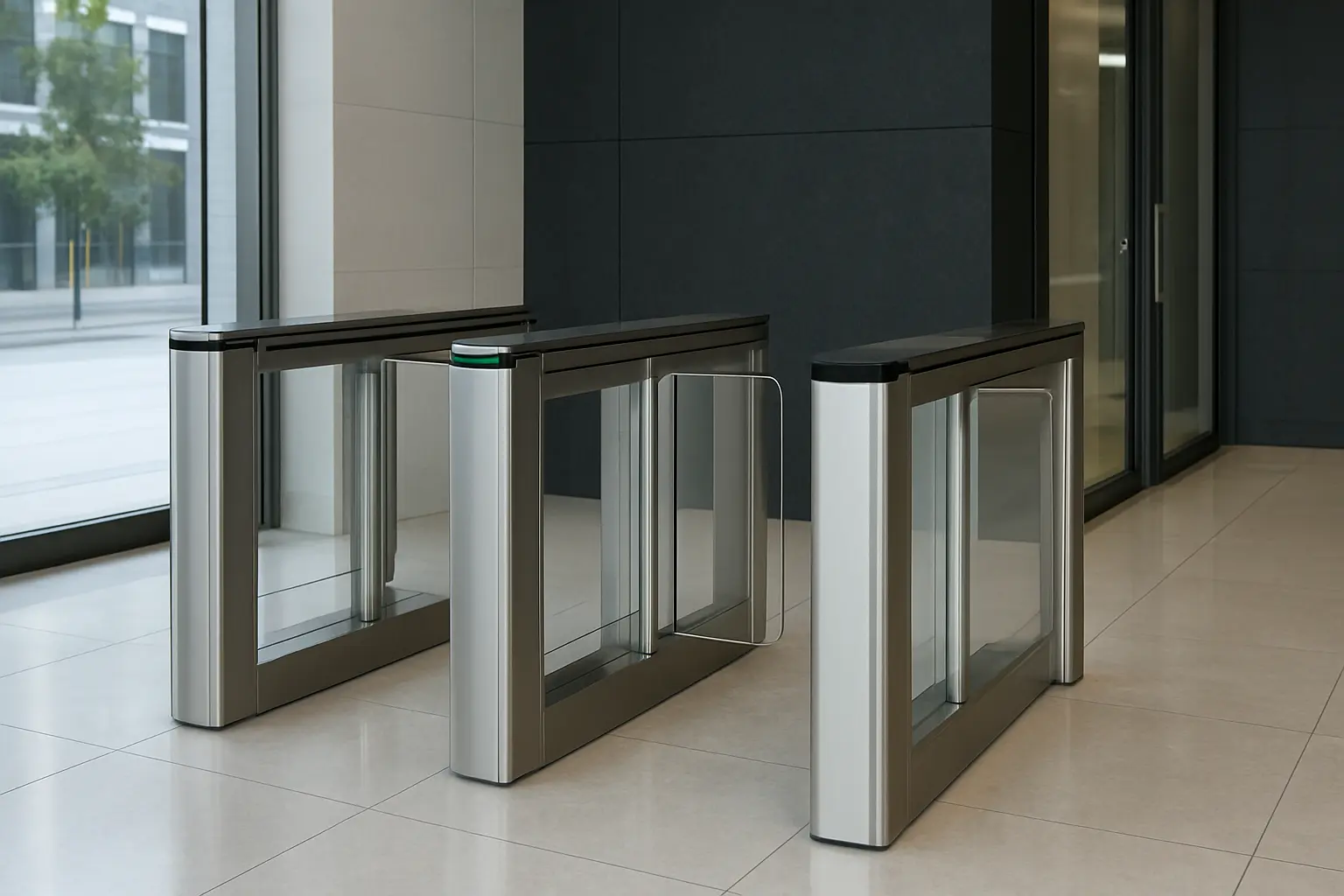
Optical turnstiles use sensors to detect entry and tailgating without physical barriers. Pros for office lobbies include a clean appearance, faster throughput and easier integration with card readers or mobile credentials. They are often listed among the best turnstiles for office building Toronto when tenant experience and aesthetics matter. Limitations include less physical resistance to forced entry compared with full-height units.
Tripod / waist-high mechanical turnstiles
Tripod turnstiles provide a mechanical barrier at waist height. They are durable and cost-effective but can slow peak flows and may feel less modern than optical lanes. Consider tripod units for after-hours perimeter control or secondary entrances.
Full-height turnstiles
Full-height turnstiles provide top-to-bottom coverage and are suited to exterior entrances or secure loading areas where preventing unauthorized entry is critical. They are commonly specified where higher security is required, but they require more space and careful egress planning.
Security revolving doors and mantraps
Security revolving doors and mantraps are used when you need single-person verification before granting access to a core or tenant floor. They combine access control, visitor processing and improved environmental separation but have higher upfront cost and require careful design for accessibility and emergency release.
Toronto-specific compliance and operational considerations
Accessibility under AODA requires an accessible alternative to any turnstile lane, typically an automated swing gate or accessible door with the same access control integration. Coordinate with local fire authorities on emergency egress: some turnstiles must unlock and allow free egress on alarm or power loss. For multi-tenant buildings, involve tenant reps and labour contacts early to align on hours, visitor policies and shared-lobby rules.
Integration with access control and building systems
Card, key-fob and biometric reader placement
Reader placement should create a natural flow: read before the lane or at a side post depending on lobby layout. Biometric readers require privacy and environmental protection; pair them with fall-back credentials for visitor handling.
Intercom and visitor handling integration
Intercoms or managed visitor kiosks should tie into the turnstile workflow for deliveries and guests. Configure temporary credentials or visitor codes that expire and integrate with reception or concierge systems where present.
Linking to lobby video and monitoring
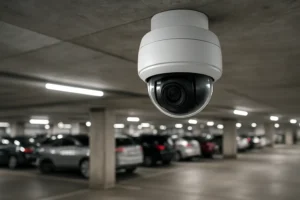
Link turnstiles to CCTV and alarm monitoring for remote verification and incident review. Ensure network cabling and PoE planning supports cameras, readers and controllers without overloading building infrastructure.
Performance planning: throughput, lane count and lobby layout
Estimate peak throughput based on tenants, shift changes and visitor volume. Typical office lobbies require at least two lanes for redundancy; high-rise multi-tenant lobbies often need three or more lanes to prevent queuing. Always include an accessible gate sized for wheelchair and service cart access and an adjacent service door for deliveries.
Installation and retrofit considerations for Toronto buildings
Plan structural mounting and floor preparations early; full-height units may require reinforced bases. Coordinate power or PoE, network cabling and controller room space with building engineers. Work scheduling should minimize lobby disruption and include clear communication to tenants and front-line staff.
Maintenance, service and lifecycle considerations
Ask about recommended preventive maintenance, available spare parts and firmware update processes for readers and controllers. A regular service plan reduces downtime and ensures emergency release functions remain compliant with fire and accessibility requirements.
Decision checklist for Toronto facility managers
- Define security level: deterrent vs high-security barrier.
- Estimate peak throughput and required lane count.
- Confirm accessible entry method (AODA-compliant).
- Verify emergency egress and alarm unlocking procedures with fire authority.
- Plan reader and intercom placement for natural flows.
- Confirm structural and power requirements for retrofit.
- Arrange service plan and software/firmware update schedule.
How 360 IT Advanced Security can help
360 IT Advanced Security provides on-site assessments, turnstile installation Toronto and access control integration services tailored to GTA office buildings. We coordinate reader placement, intercom and video integration, and work with building management to address AODA and emergency egress needs. Our team can evaluate lanes, select suitable optical turnstiles, full-height barriers or mantrap solutions and recommend a maintenance plan to keep systems operational.
Conclusion
Choosing the right lobby security barrier is a balance of throughput, accessibility, code compliance and integration with your building systems. Use the checklist above to narrow options, involve stakeholders early, and plan for installation and ongoing service. Contact 360 IT Advanced Security to schedule an on-site assessment and begin planning your turnstile access control integration in the Toronto area.