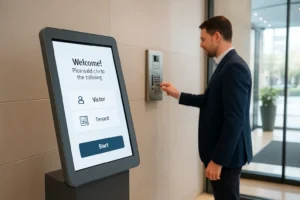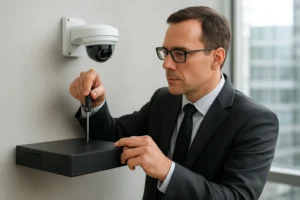
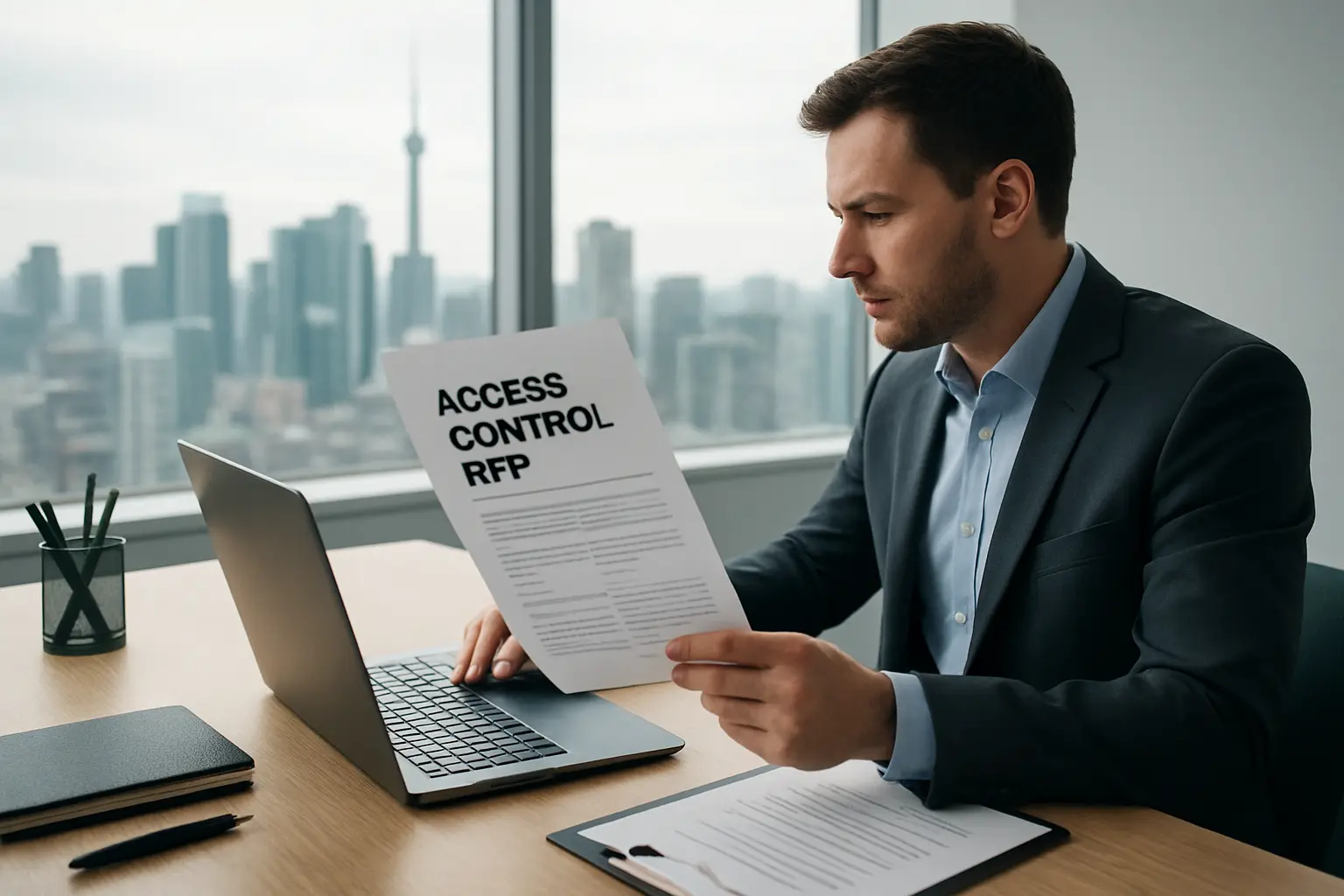
Preparing an access control procurement for a commercial property in Toronto requires both technical clarity and clear procurement language. This guide explains how to write an access control RFP Toronto property owners and facility managers can use to attract comparable, vendor-ready bids. It includes practical scope language, an evaluation matrix, a sample checklist and sections you can copy/paste into your own RFP.
Why a formal RFP matters for commercial access control in Toronto
A formal access control RFP Toronto procurement helps ensure bidders price the same scope, propose compatible hardware and network approaches, and disclose cybersecurity and support plans. For multi-tenant, retail or industrial properties across the GTA, an RFP reduces change orders, clarifies warranty and service expectations, and makes it easier to compare CAPEX and OPEX options.
When to use an RFP vs. an RFQ or RFI
Use an RFP when you have defined objectives and need technical proposals and commercial terms. Use an RFQ for straightforward price comparisons on approved products. Use an RFI early to gather vendor capabilities and solutions without committing to a timeline. For complex integrations—VMS, intercom, visitor management—an RFP is usually appropriate.
Preparing the project overview: sample language
Include a concise project summary: site locations, number of controlled doors, tenants, hours of operation, and primary objectives (secure egress, tenant access control, integration with CCTV/intercom). Sample language to include: “The project requires design, supply, installation, testing and commissioning of an access control solution for XXXXX property located in Toronto, including hardware, software, network integration and training.”
Defining scope of work
Site survey and documentation
- Site survey expectations, as-built documentation and floor plans.
- Detailed discovery of existing wiring, controllers and credential formats.
Hardware
- Controllers, readers, credentials (card/key-fob/biometric) and turnstiles/gates with model options and open protocol requirements.
Software and integrations
- Access management platform, required integrations (VMS, intercom, visitor management) and licensing model.
Network, power and cabling
- PoE needs, patching expectations, rack space, and changes required to the building network.
Cybersecurity
- Network segmentation for controllers, encrypted communications, password policies and required vendor security documentation.
Installation, testing and commissioning
- Acceptance testing criteria, punchlist resolution and handover deliverables.
Training and documentation
- Administrator training, user guides and as-built drawings.
Service, support and maintenance requirements
Request warranty terms, response SLAs, preventative maintenance schedules and a spare parts policy. Ask vendors to describe software update processes and how patches are applied. For proposals, require a clear separation of CAPEX (equipment, installation) and OPEX (support, cloud subscriptions) so you can compare lifecycle costs.
Compliance and privacy considerations for Ontario
Ask bidders to confirm compliance with Ontario privacy obligations: retention policies for access logs, who has access to personal data, and required signage for areas using biometric or video-based authentication. Request sample privacy notices and data deletion procedures.
Proposal format, evaluation and timeline
Require line-item pricing and optional components (future door expansion, mobile credentials). Include an evaluation matrix scoring technical compliance, commercial terms, local support and references. Publish a clear timeline, instructions for site visits and a question submission process.
Sample RFP checklist (copy/paste sections)
- Project overview and objectives
- Scope of work: hardware, software, network, cybersecurity
- Installation, testing and acceptance criteria
- Support, warranty and maintenance terms
- Privacy and data handling requirements
- Proposal format, pricing schedule and evaluation criteria
Use these as section headers in your RFP document and ask vendors to respond to each numbered item.
How to run vendor demonstrations and what to look for
Request live demonstrations of the proposed management platform, credential issuance, and integration points. Ask for a technical interview that includes network and cybersecurity questions. Red flags include vague warranty language, missing cybersecurity details and unclear local support arrangements.
Reasons to choose 360 IT Advanced Security
- Local focus on Toronto and the GTA with project management and site coordination for commercial properties.
- Vendor-neutral procurement support and practical RFP language tailored to building and IT stakeholders.
- End-to-end services from site survey and integration to training and ongoing maintenance.
Conclusion: A well-written access control RFP reduces ambiguity, standardizes responses and helps you evaluate lifecycle costs across vendors. Using the checklist and scope items above will make vendor comparisons more objective and reduce project risk.
Contact 360 IT Advanced Security to request a tailored commercial access control RFP template and a complimentary RFP review.