Modern multi‑tenant lobbies in Toronto and the GTA need seamless interactions between visitor registration, intercom systems and door access to protect residents, streamline deliveries and reduce front‑desk burden. This guide explains how to integrate visitor management with access control Toronto properties use every day, with practical workflows, technical options and deployment checklists tailored for property managers, condo boards and facility or security/IT managers.
Common use cases and workflows
Successful integrations support typical lobby scenarios without adding complexity. Key workflows include:
- Resident/tenant access: mobile credentials, fobs or PINs tied to the access control system for hands‑free lobby entry.
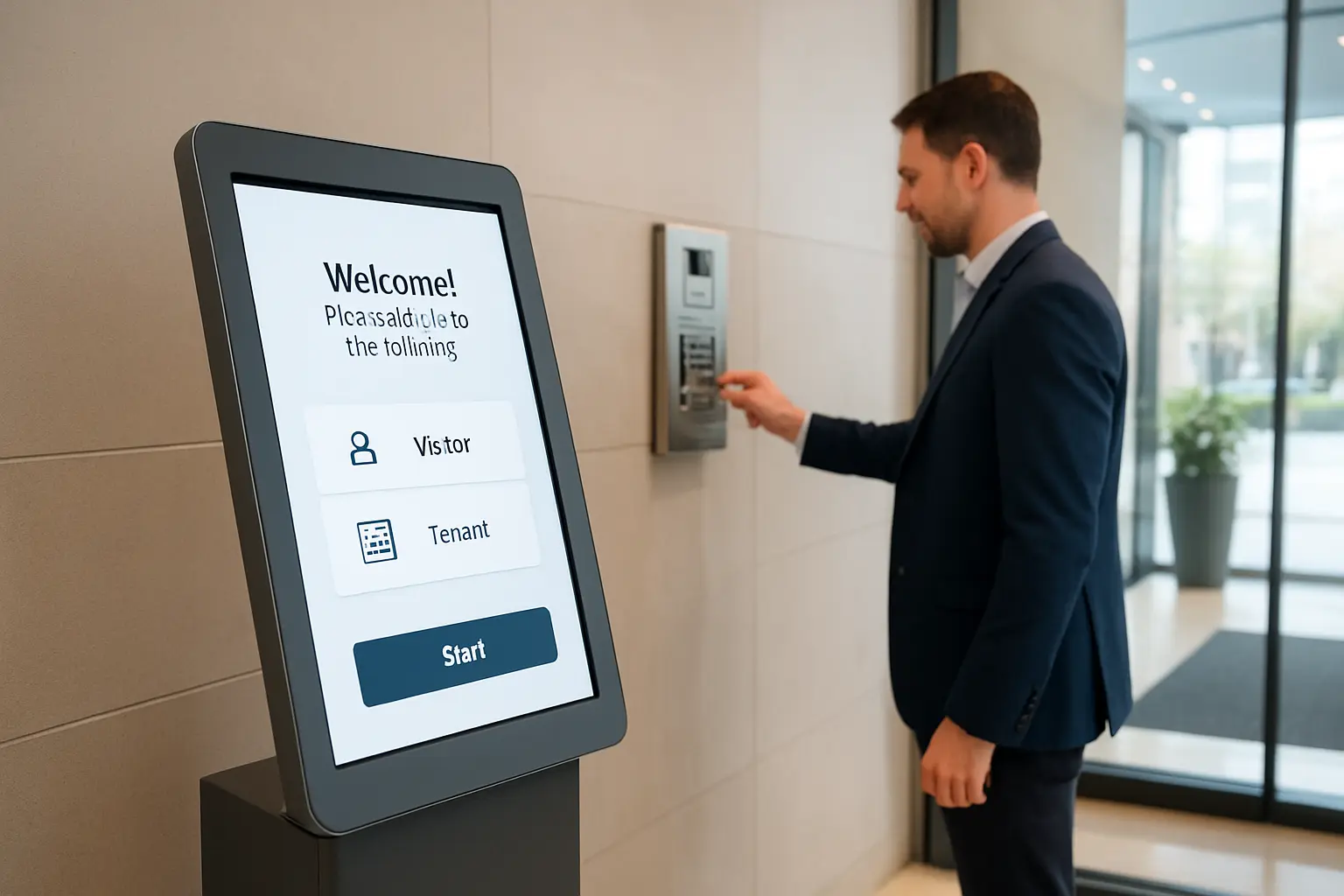
- Visitor check‑in: visitor kiosks or cloud VMS issue QR codes, temporary credentials or notify tenants via SIP intercom or SMS.
- Delivery handling: scheduled deliveries verified at kiosks with door releases or parcel room access controlled by the access system.
- Trades and contractors: time‑limited credentials, contractor vetting via VMS and supervised entry logging.
Core components to integrate
Visitor management kiosks and cloud VMS
Modern visitor kiosks register guests, capture photos, and generate time‑bound access tokens or QR codes. Cloud VMS platforms provide webhooks and APIs for integration with property management and access control back ends—ideal for visitor management integration GTA buildings need.
Intercom systems
IP/SIP voice and video intercoms at lobby stations connect tenants to visitors and can trigger door release. For condo lobby security integration Toronto buildings require, intercoms should support directory integration and remote unlock via mobile apps.
Access control hardware
Readers (card, mobile credential, biometric), electric strikes or magnetic locks, and controllers form the physical access layer. Hardware selection depends on door type, expected credential method and upgrade path to OSDP where possible for secure communications.
Back‑end systems
Access control panels, directory services (LDAP/Active Directory) and mobile credential platforms coordinate identity and permission lifecycles. Centralized user management reduces admin overhead for multi‑tenant building access control Toronto projects commonly face.
Technical integration options and protocols
Wiegand vs OSDP
Wiegand is widespread but limited in security and diagnostics. OSDP (Open Supervised Device Protocol) offers encryption, supervision and device management—recommended when upgrading readers and controllers to increase resilience.
SIP for intercom voice/video and door release
SIP permits intercom call routing to tenant smartphones or desk stations and can send door‑release commands to access controllers. Choose intercoms with robust SIP stacks and support for NAT traversal when remote connectivity is required.
APIs, webhooks and SSO
APIs and webhooks are the glue between cloud VMS, property management systems and access control platforms. Single sign‑on (SSO) and directory sync reduce duplicate accounts and speed tenant onboarding.
Network and cybersecurity considerations
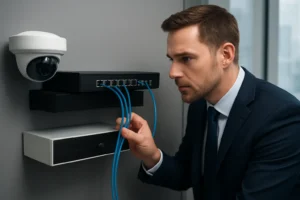
- Logical segmentation: place cameras, intercoms and access controllers on separate VLANs with strict firewall rules.
- Secure remote access: use VPNs, jump hosts and MFA for administration portals.
- Firmware and patching: maintain a schedule for firmware updates and credential lifecycle management to revoke lost or returned credentials promptly.
Privacy and compliance for Ontario
Collect only the visitor data required, keep retention windows defined, and ensure signage clearly explains data collection and consent. Work with legal or privacy advisors to align policies with provincial regulations and condominium rules.
Design and deployment checklist
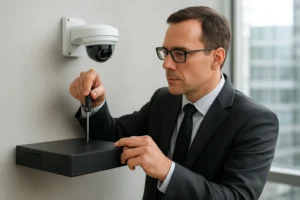
- Site survey: camera sightlines, intercom height/visibility, cable routes and door hardware type.
- Power and redundancy: PoE provisioning, UPS for controllers and intercom power, and separate power for electric strikes.
- Integration test plan: verification of credential issuance, QR/barcode scanning, SIP calls, and fail‑safe door behavior.
- Tenant onboarding: communication templates, mobile credential enrollment steps and front‑desk training.
Vendor selection and procurement tips
Ask integrators to demonstrate working integrations, provide API documentation, outline SLAs for uptime and support, and show sample project timelines. For proposals, require clear scope on device warranties, maintenance packages and software subscription terms.
Cost, timeline and when to call a professional
Costs and schedules depend on site complexity, cabling needs and whether you upgrade to OSDP or retain legacy wiring. Call a professional integrator when multiple systems need synchronized user management, when cybersecurity segmentation is required, or when tenant workflows must be automated—these are common risk triggers that complicate DIY approaches.
Why choose 360 IT Advanced Security
360 IT Advanced Security designs end‑to‑end lobby solutions that combine visitor kiosks, SIP intercoms and modern access control hardware with careful attention to network security and privacy practices relevant to Toronto and the GTA. We focus on practical deployments that minimise disruption, include a clear testing and onboarding plan, and provide ongoing support for mixed systems.
Integrating systems is not just a technology task—it’s about matching workflows to tenant expectations and building policies. If you plan to integrate visitor management with access control Toronto properties depend on, start with a site survey and a documented integration plan.
Contact 360 IT Advanced Security to schedule a site assessment.
Conclusion
An effective lobby integration reduces friction for tenants, improves security and streamlines operations for property managers. By choosing the right hardware, protocols and integration partners, Toronto multi‑tenant buildings can deliver reliable visitor handling, remote access via intercoms and controlled entry with centralized credential management. A careful design, enforced cybersecurity practices and clear tenant onboarding will ensure the system delivers long‑term value.