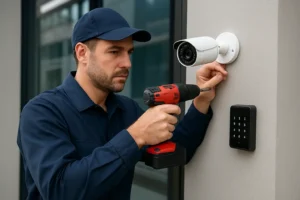
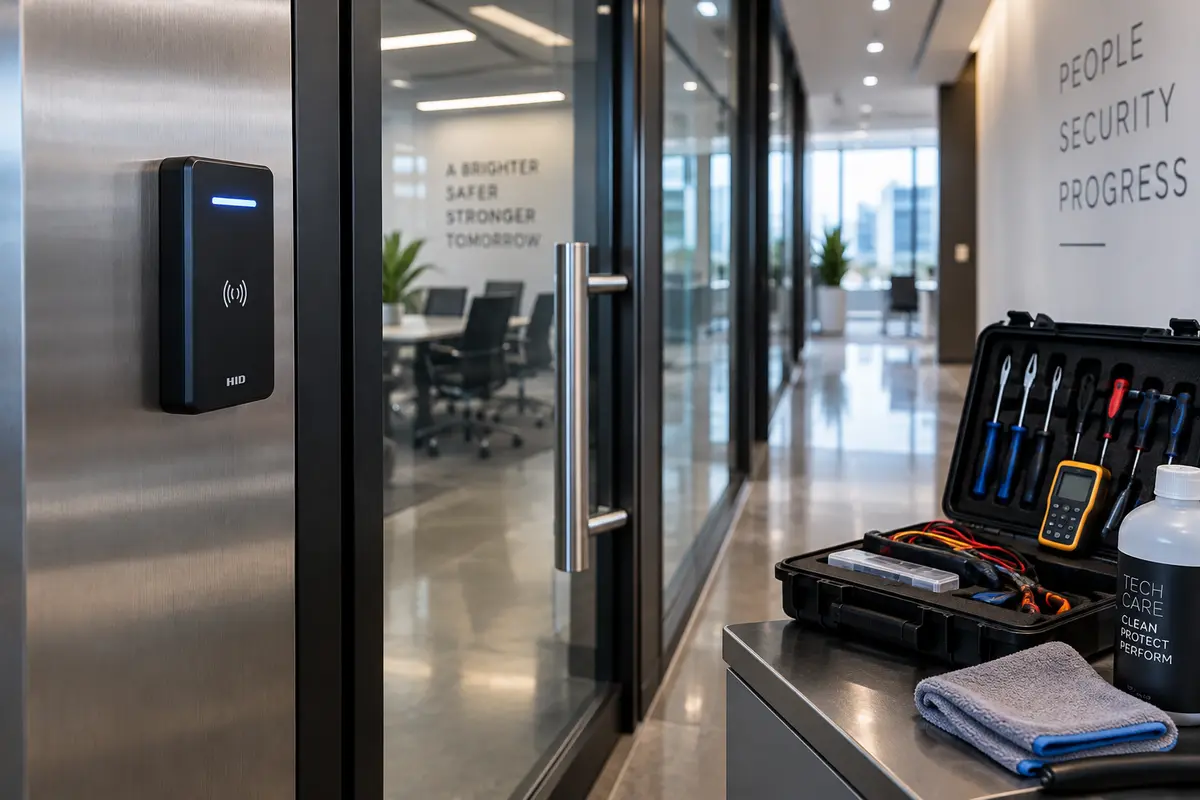
An access control system maintenance checklist for toronto businesses covers testing card readers, verifying electronic door locks, inspecting backup batteries, and updating user permissions.
Access Control System Maintenance Checklist for Toronto Businesses
A standard maintenance schedule reviews physical door components, electrical systems, and management software. Facilities face heavy snow, salt, and humidity throughout the year. Regular evaluations protect delicate sensors and mechanical latches from premature wear. A structured plan prevents sudden system lockouts and keeps daily building operations secure.
Hardware Inspection and Physical Door Alignment
Physical door fittings require frequent observation. Technicians and facility managers must verify that magnetic locks and electric strikes engage smoothly without catching. Winter freeze cycles often shift door frames in commercial structures. Cleaning debris from keypads and card readers prevents false entry rejections during morning rush hours.
Power Supplies and Backup Battery Verification
Electronic access devices rely on continuous electricity to remain operational. Backup batteries require scheduled voltage tests to guarantee functionality during unexpected municipal grid outages. Loose wiring connections or swollen batteries must undergo immediate replacement. Checking transformer outputs keeps locks supplied with steady operating current.
Database Management and Credential Audits
Software upkeep is just as vital as maintaining physical equipment. System administrators must remove credentials for former staff members and contractors without delay. Reviewing access logs uncovers unusual door activity or repeated clearance failures. Installing manufacturer firmware updates fixes known operating vulnerabilities and maintains network communication integrity.
Frequently asked questions
How often should access control hardware receive maintenance?
A facility should conduct visual inspections monthly and perform comprehensive technical testing twice each year. High traffic entrances benefit from quarterly evaluations to avoid sudden equipment failures.
Why does cold weather affect access control equipment?
Freezing temperatures contract metal door frames and alter latch alignment. Moisture and road salt can also penetrate outdoor readers and corrode sensitive electronic contacts.
What should be done when an electronic door lock fails to engage?
Inspect the door alignment, check for physical obstructions, and test the power supply voltage. If the lock remains unresponsive, disconnect the power to check the default mechanical release.
How frequently should user access privileges be audited?
Credential lists should undergo review on a monthly basis. Prompt removal of former staff access prevents security gaps and keeps building rosters accurate.
Summary
Consistent preventive care extends the life of security hardware and shields properties from unexpected breaches. By checking mechanical locks, testing backup batteries, and updating user databases, commercial buildings maintain continuous protection in every season.