Toronto and Greater Toronto Area commercial properties increasingly evaluate biometric access control Toronto as a replacement or supplement to cards and keys. Facilities managers, security and IT decision-makers need a practical resource that compares technologies, addresses Ontario privacy considerations, and lays out procurement and integration steps before issuing a quote or RFP.
What is biometric access control and how it differs from traditional systems
Biometric access control uses measurable physical or behavioral traits—such as fingerprints, facial features, iris patterns or palm geometry—to verify identity. Unlike card or fob systems, biometrics ties access to a person rather than a token that can be lost or shared. For Toronto commercial sites this can reduce credential management overhead and improve auditability, but it also raises specific privacy and technical requirements.
Common biometric technologies: pros and cons for commercial use
Fingerprint access control
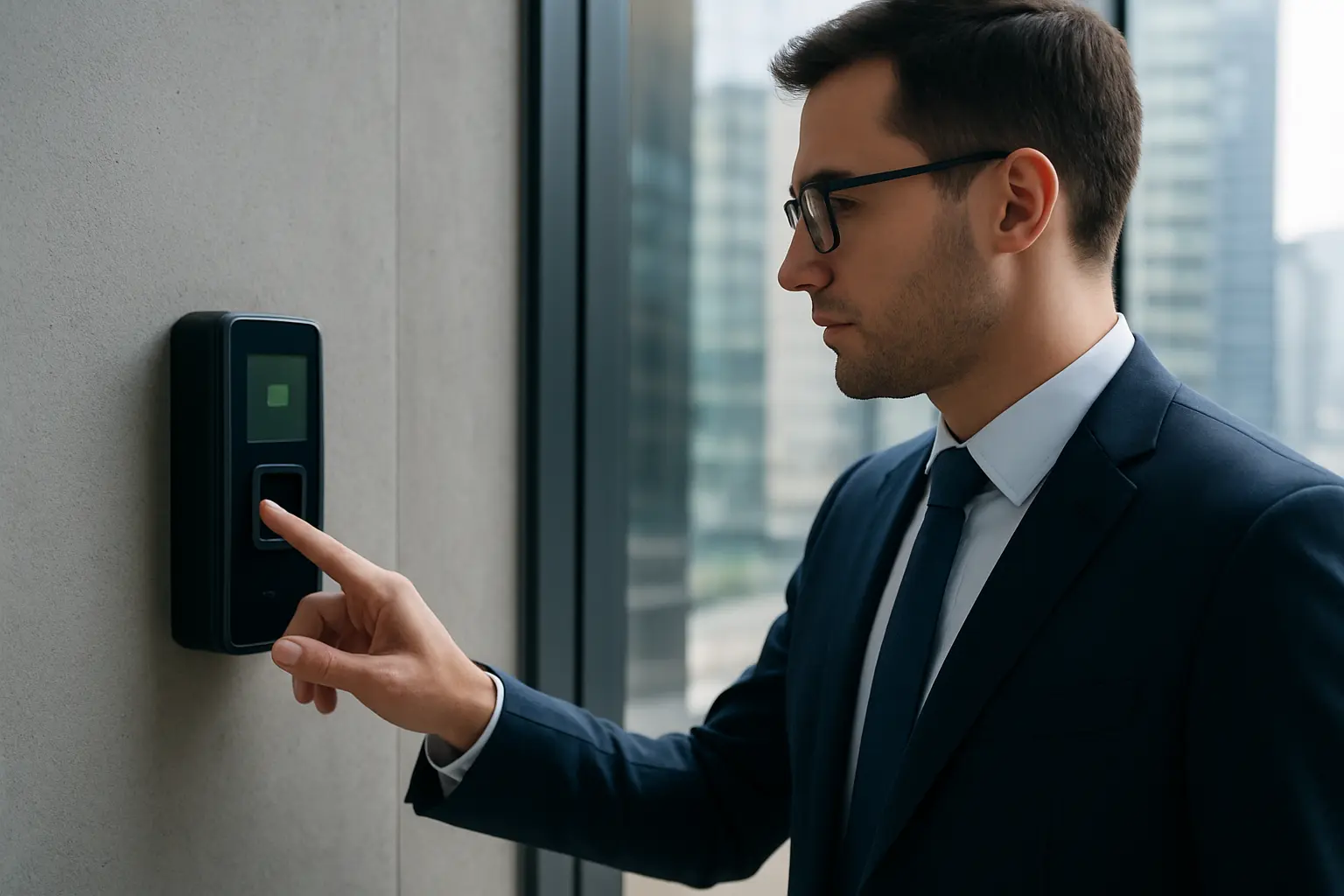
Fingerprint access control Toronto solutions are compact, fast and widely supported by access control platforms. They work well for employee entrances and internal doors. Pros: familiar, cost-effective, reliable when properly maintained. Cons: less effective for wet or dirty hands, and some users may object to fingerprint capture.
Facial recognition access control
Facial recognition access control Toronto solutions offer contactless entry and are useful at busy lobbies and reception areas. Pros: contactless, quick throughput, can integrate with CCTV for visual verification. Cons: lighting sensitivity, camera placement and potential privacy concerns under Ontario law.
Iris and palm scanners
Iris and palm readers provide high accuracy and are suited for high-security zones. Pros: very low false-acceptance rates. Cons: higher cost and slower enrollment processes; may be overkill for many commercial properties.
Benefits for Toronto commercial properties
- Improved security and non-transferable credentials tied directly to individuals.
- Detailed audit trails for compliance and incident investigations.
- Reduced administrative tasks around lost or reissued cards.
- Contactless options that support hygiene and modern workplace expectations.
- Flexible workflows for employees, contractors and visitors when integrated with existing systems.
Privacy, compliance and workplace considerations in Ontario
Collecting biometric identifiers triggers privacy obligations. Best practices include minimizing stored data (store templates, not images), limiting retention periods, clear employee/visitor notices, and documented consent where required. Always consult legal counsel to confirm compliance with provincial and federal privacy laws before deployment.
Integration checklist for existing systems
When evaluating vendors, verify how biometric devices will integrate with your current infrastructure:
- Compatibility with your access control panel and management software.
- Intercom and video interconnect for visitor verification.
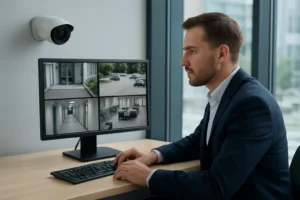
- CCTV integration for incident correlation.
- Directory and ID management integration (e.g., LDAP/Active Directory) for user provisioning.
Technical and cybersecurity considerations
Decide whether biometric templates are stored on-device or on a central server. On-device storage reduces network exposure, while central servers simplify multi-site management. In all cases enforce encryption in transit and at rest, use network segmentation for access control infrastructure, and implement role-based administration. Professional configuration prevents common misconfigurations that create security gaps.
Operational factors: scalability and workflows
Plan for enrollment capacity, redundancy and multi-site management. Consider how your system will handle contractors, visitors and temporary access—options include timed credentials, supervised enrollment kiosks and integrated visitor management. Ensure processes exist for offboarding and emergency access.
Maintenance, warranties and lifecycle planning
Clarify firmware update policies, support response times and end-of-life plans for hardware. Regular maintenance, timely patching and predictable replacement cycles keep systems secure and reliable. Service agreements should cover both hardware and software support expectations.
How to evaluate vendors and quotes
- Start with a site survey to capture door types, power and network availability.
- Request a demo or proof-of-concept on representative doors or lobbies.
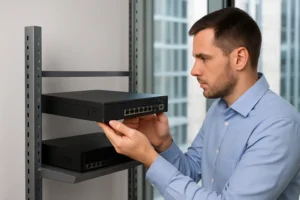
- Ask for integration details and a clear scope of work for wiring, mounting and configuration.
- Check references for projects of similar size and complexity in commercial properties.
When to contact 360 IT Advanced Security
If you need an onsite assessment, integration planning or a staged proof-of-concept in Toronto or the GTA, 360 IT Advanced Security provides biometric access control consultation and installation services. Our team can document existing systems, produce an integration checklist and coordinate enrollment and commissioning with your operations team.
Frequently asked questions
Can biometrics replace cards entirely?
Biometrics can replace cards in many use cases but hybrid deployments are common—biometrics for secure areas and cards for general access—to balance convenience, cost and user acceptance.
How is biometric data protected?
Protection is achieved through template-based storage, encryption, access controls and limiting data retention. Policies and technical controls should be in place before rollout.
Will facial recognition work in a busy lobby?
Yes, when cameras are properly sited and lighting is managed. Testing is essential to confirm throughput and accuracy for your specific environment.
Ready to evaluate biometric access control Toronto for your property? Contact 360 IT Advanced Security to schedule an onsite assessment.
Note: This guide provides practical planning and integration information. Consult legal counsel for regulatory or employment-law questions about biometric data.